
ChRon-iK FaTi-Gue SynDro-me is NoT in YouR H34D, is in YoüR GÜT

http://neurosciencenews.com/chronic-fatigue-microbiome-4581/


HomeFeatured
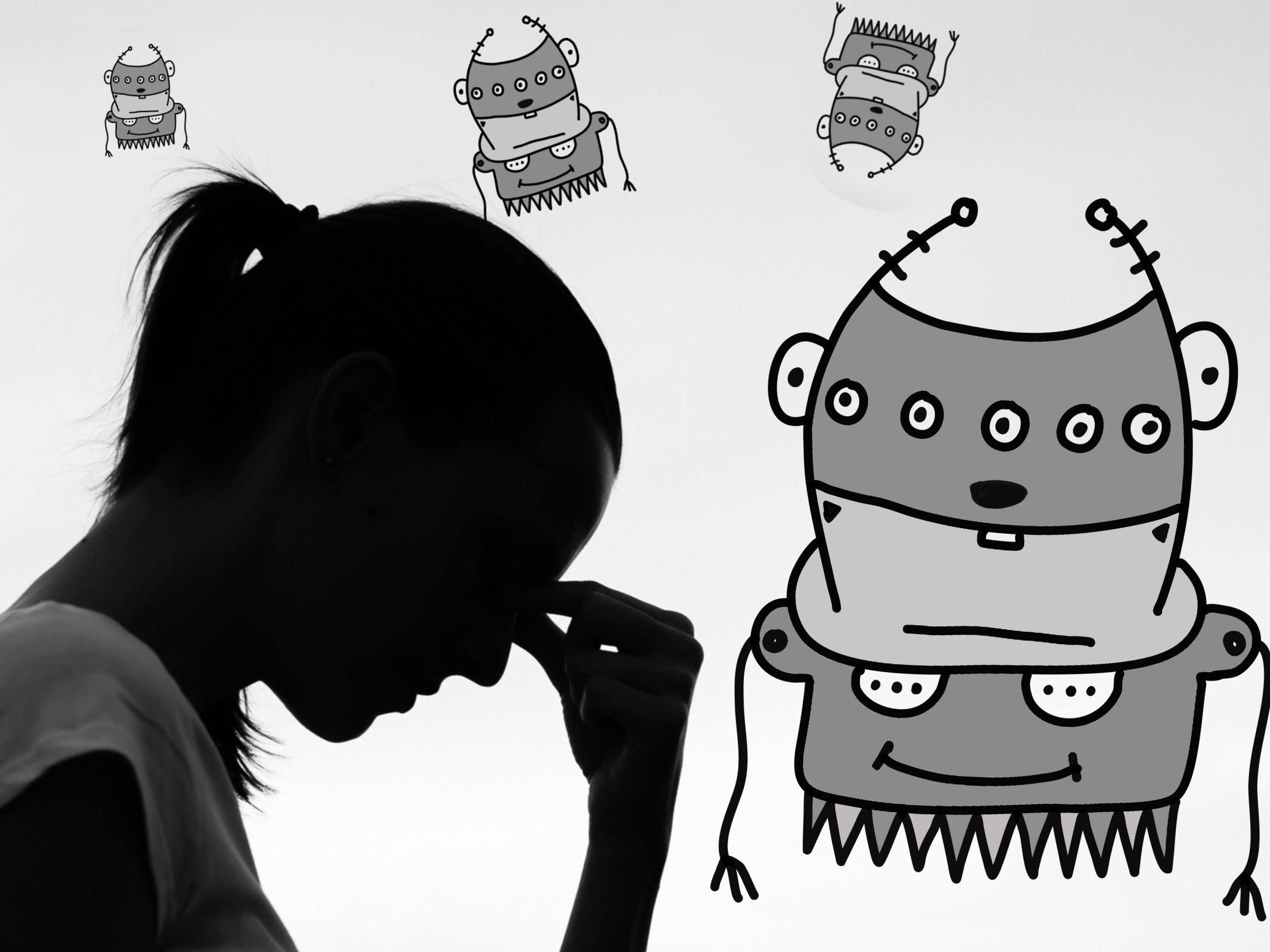
Chronic Fatigue Syndrome Is Not in Your Head, It’s in Your Gut
Neuroscience NewsNEUROSCIENCE NEWSJUNE 27, 2016
FEATUREDNEUROLOGYOPEN NEUROSCIENCE ARTICLES6 MIN READ

Summary: Researchers have identified biomarkers for chronic fatigue syndrome in gut bacteria and in inflammatory microbial agents in the blood.

Source: Cornell University.

Physicians have been mystified by chronic fatigue syndrome, a condition where normal exertion leads to debilitating fatigue that isn’t alleviated by rest. There are no known triggers, and diagnosis requires lengthy tests administered by an expert.

Now, for the first time, Cornell University researchers report they have identified biological markers of the disease in gut bacteria and inflammatory microbial agents in the blood.

In a study published June 23 in the journal Microbiome, the team describes how they correctly diagnosed myalgic encephalomyeletis/chronic fatigue syndrome (ME/CFS) in 83 percent of patients through stool samples and blood work, offering a noninvasive diagnosis and a step toward understanding the cause of the disease.

“Our work demonstrates that the gut bacterial microbiome in chronic fatigue syndrome patients isn’t normal, perhaps leading to gastrointestinal and inflammatory symptoms in victims of the disease,” said Maureen Hanson, the Liberty Hyde Bailey Professor in the Department of Molecular Biology and Genetics at Cornell and the paper’s senior author. “Furthermore, our detection of a biological abnormality provides further evidence against the ridiculous concept that the disease is psychological in origin.”

“In the future, we could see this technique as a complement to other noninvasive diagnoses, but if we have a better idea of what is going on with these gut microbes and patients, maybe clinicians could consider changing diets, using prebiotics such as dietary fibers or probiotics to help treat the disease,” said Ludovic Giloteaux, a postdoctoral researcher and first author of the study.

In the study, Ithaca campus researchers collaborated with Dr. Susan Levine, an ME/CFS specialist in New York City, who recruited 48 people diagnosed with ME/CFS and 39 healthy controls to provide stool and blood samples.

The researchers sequenced regions of microbial DNA from the stool samples to identify different types of bacteria. Overall, the diversity of types of bacteria was greatly reduced and there were fewer bacterial species known to be anti-inflammatory in ME/CFS patients compared with healthy people, an observation also seen in people with Crohn’s disease and ulcerative colitis.

Image shows gut bacteria.
The researchers sequenced regions of microbial DNA from the stool samples to identify different types of bacteria. Overall, the diversity of types of bacteria was greatly reduced and there were fewer bacterial species known to be anti-inflammatory in ME/CFS patients compared with healthy people, an observation also seen in people with Crohn’s disease and ulcerative colitis. NeuroscienceNews.com image is for illustrative purposes only.
At the same time, the researchers discovered specific markers of inflammation in the blood, likely due to a leaky gut from intestinal problems that allow bacteria to enter the blood, Giloteaux said.

Bacteria in the blood will trigger an immune response, which could worsen symptoms.

The researchers have no evidence to distinguish whether the altered gut microbiome is a cause or a whether it is a consequence of disease, Giloteaux added.

In the future, the research team will look for evidence of viruses and fungi in the gut, to see whether one of these or an association of these along with bacteria may be causing or contributing to the illness.

ABOUT THIS NEUROLOGY RESEARCH ARTICLE
Funding: The study was funded by the National Institutes of Health.

Source: Melissa Osgood – Cornell University
Image Source: This NeuroscienceNews.com image is in the public domain.
Original Research: Full open access research for for “Reduced diversity and altered composition of the gut microbiome in individuals with myalgic encephalomyelitis/chronic fatigue syndrome” by Ludovic Giloteaux, Julia K. Goodrich, William A. Walters, Susan M. Levine, Ruth E. Ley and Maureen R. Hanson in Microbiome. Published online June 23 2016 doi:10.1186/s40168-016-0171-4
 

MorFogénesis Espontánea

Es una especulación experimental sobre la multiplicidad, la endosimbiosis, el hologenoma, la conciencia y el proceso creativo de la forma en la poiesis.  Un experimento sobre dibujo automático, generativo y expandido, iniciado por arcangelo constantini en 1997, cuando desarrolló un “ neuro algoritmo”, que emplea como proceso creativo para dibujar organismos antropomórficos improvisados, cada dibujo que realiza es único e irrepetible, surge espontáneamente  en el momento del trazo y no es preconcebido antes del acto del dibujo. Un algoritmo en el que un punto se transforma en una línea y de un flujo de trazos libres surge un organismo único, idea sugerente a el Punto y la línea en el plano de Kandisnky 

La generación espontánea de la vida era una antigua teoría aristotélica  en que planteaban que la vida podría surgir de manera espontánea de compuestos inorgánicos. 

A este experimento de dibujo automático lo llamó  ¨ MorFogénesis Espontánea ¨, más que la generación espontánea de la vida, es la de la forma, como referente de la vida, la que se genera en esta práctica de dibujo expandido. 

Las Bacterias y  las Archae son organismo unicelulares, simples y básicos de la familia de las procariotas,  que en procesos evolutivos mutualistas y simbióticos dieron origen a las eucariotas, originando los organismos multicelulares que evolucionaron a todas las formas y estructuras biológicas que han existido en el planeta

De formas simples, surgieron las formas complejas.  El organismo humano tiene origen en esta sopa primordial y vive en endosimbiosis con las bacterias, ya que la microbiota forma parte fundamental de los procesos metabólicos, de la salud, y las  emociones. En realidad somos más bacteria que humanos, ya que estas son más numerosas que las células de nuestro cuerpo, una multiplicidad de diversos organismos forma nuestra microbiota sin ellos no podríamos vivir.

La hipótesis del Hologenoma menciona que son más de 8 millones los genes contenidos en el cuerpo humano , de los cuales solo 27,000 son humanos, una inmensidad de información que de igual manera evolucionó interrelacionadose con nuestra especie 

El acto de dibujar bakteria, es liberar a la conciencia directa del proceso del dibujo, es dejar fluir al trazo y liberarlo a la espontaneidad,  es meditar sobre la endosimbiosis, sobre los microorganismos que habitan el cuerpo, sobre las complejas relaciones metabólicas, sobre el hologenoma, sobre la multiplicidad, sobre la conciencia y el origen del “YO” y el Ego. 

Las bacterias son organismos unicelulares simples con un código genético complejo 

Sin entrar en trance pero como un médium, al dibujarlas sufren una mutación extrema, una especie de entrecruzamiento genético, de organismos simples se antropoformisan a entidades complejas, tomando una personalidad específica, pasan de un estado onírico a un medio concreto,  el papel, para luego emigrar en un proceso digital a la red. como sistemas interactivos visual sónicos, micro poéticos con la intención de ¨ infectar¨ la mente de los usuarios .

La Morfología es tanto el estudio de las formas y estructuras biológicas como las del diseño humano, de la misma manera en lingüística estudia la estructura de las palabras. 

En el movimiento dadaísta de la posguerra, liderados por el poeta Andre Breton, desarrollaron la escritura automática, como un proceso poético en el que liberan al consciente y dejan fluir al subconsciente en la escritura de textos que toman coherencia posterior al acto.

Desde que empezó a dibujar bakteria, de forma inusual y empírica cada una que dibuja está asociada a palabras que sufren una mutación léxica, estas palabra de manera simultánea al dibujo son espontáneas y surgen en el momento del trazo. 

Una área del cerebro controla el neuroalgortimo de dibujo generativo mientras otra esta activa con el lenguaje 

Bakteria estructura a el lenguaje escrito como un organismo que evoluciona, muta , cambia y se transforma, con el advenimiento de los sistemas computacionales, un arsenal de caracteres ascii  como símbolos del alfabeto fonético internacional, están en disposición de usarse para infectar la gramática y complejizar y estetizar la lectura de manera Morfo Poética 

Al trazar bakteria, libera al subconsciente en el acto poético de nombrarlas, usando dos palabras incontextas con las que posteriormente construye un poema . Durante el dadaísmo surgió la escritura automática, para explorar la poiesis del subconsciente artístico. 

Cada palabra es Infectada gramaticalmente, explorando el código ASCII de los sistemas computacionales, para generar un acto estético y fonético. Correlacionado con el flujo del trazo generativo y la personalidad del individuo que emerge  

La serie de Re_CiKLaDo es un ejercicio diario de publicación en línea, Dibujo la bakteria sobre papel reciclado, escribo dos palabras que parecen carecer de relación, escaneo cada dibujo y lo coloreo de manera digital, antes de publicarla en red realizó una investigación semántica de cada palabra con las que nombre a la bakteria  y construyó un micropoema experimental irreverente de lenguaje transgredido, que contextualiza la relación y el sentido de las palabras con las que nombre a la bakteria en su momento. 

Bakteria.org forma parte de una práctica continua desde 1997, en un inicio bakteria habitaba en el repositiorio de net art  unosunosyunosceros.com un sistema que especula sobre la percepción del espacio y los aspectos tangibles e intangibles de la realidad, con experimentos visual sonoros especulativos sobre tres estados de percepción. Onirico-Concreto-Digital,  La percepción de la mente en el entorno onírico , un espacio de subjetividad, el concreto como el objetivo y material, y la nueva materialidad de los entornos digitales.

Bakteria.org es fundamental en este experimento continuo de especulación sobre la realidad, un proceso que empieza en el entorno onírico (derivado de los procesos biológicos) que aterriza a un medio  concreto ( el papel ) para derivarse en sistemas interactivos digitales ( la red ) e infectar por medio de la interacción la mente de los usuarios ( onírico ) regresando al flujo original e inicial del proyecto.

A la fecha son miles de bakteria dibujadas, mediante distintos procesos estéticos,  estáticos y dinamicos, sonoros e interactivos son publicadas en red manteniendo el espíritu de horizontalidad del medio. 

En la actualidad se está dando una investigación exponencial sobre la microbiota, muy importante por los alcances que tiene con la salud humana  y la conciencia. De manera paralela nos demuestra el estado de simbiosis de la vida, en el que no somos organismos aislados e independientes, si no que formamos parte de uno holos. Las neurociencias también están desarrollando una investigación muy importante para entender los procesos evolutivos de la conciencia y su relación con los microorganismos y el hologenoma 

El arte transdisciplinar y la especulación de la realidad son fundamentales en la comprensión de la realidad y la importancia de una interacción sana con el medioambiente. 

Bakteria.org este es un experimento continuo de 20 años sobre estados de percepción poéticos y neuro estetica. El proceso continúa y continuará indefinidamente 

La siguiente etapa es construir una taxonomía del universo de bakteria.org  y entender de manera más clara el neuro algoritmo de dibujo generativo y la morfogénesis espontanea 


MiKRo.ORga_NizMoz 3N Be-Bi)Daz Fer:Men/Ta/DAz D3L A-GA)vE

Por Génesis Gatica Porcayo

Ciudad de México. 23 de septiembre de 2016 (Agencia Informativa Conacyt).- México es el país que tiene el mayor número de especies de agave en el mundo, ya que cuenta con 75 por ciento de los ejemplares existentes, de acuerdo con el investigador Rubén Moreno Terrazas. La presencia del agave es considerada como un símbolo de la cultura, tradiciones y costumbres de la nación, del que se tiene un registro aproximado de 165 a 200 especies en el país.

Desde tiempos prehispánicos, el uso del agave en México se ha caracterizado por la producción de bebidas que hoy son consideradas tradicionales, como el pulque o el mezcal, incluido el tequila. Pero, ¿qué microorganismos están presentes en los procesos de fermentación de las bebidas de agave?

Ante la necesidad de conocer más acerca de los microorganismos que están presentes en estos procesos, se busca identificar los organismos clave con el objetivo de estudiarlos y controlarlos para obtener una mejor producción de bebidas a nivel industrial.

En entrevista para la Agencia Informativa Conacyt, el doctor Rubén Moreno Terrazas, investigador del Departamento de Ingeniería y Ciencias Químicas de la Universidad Iberoamericana (UIA), explicó las razones por las que el protocolo en el que se encuentra trabajando, en colaboración con otras instituciones como la Universidad Nacional Autónoma de México (UNAM) y el Centro de Investigación y Asistencia en Tecnología y Diseño del Estado de Jalisco (Ciatej), permitirá conocer con mayor detalle las características y tratamiento posterior de los microorganismos.

Importancia de analizar la microbiota

Según Rubén Moreno Terrazas, esta planta es un recurso natural que ha sido explotado por muchos años no solo para la producción de bebidas, sino también para consumo medicinal o alimenticio, por lo tanto es considerado un instrumento importante de investigación para saber más de sus propiedades y de los fenómenos que rodean su aprovechamiento.

En función del grado de fermentación es la evolución de la microbiota, en el que las bacterias lácticas disminuyen el pH y acidifican el producto para dar paso a las levaduras, que son las encargadas de producir el alcohol. Las levaduras incrementan su presencia en este proceso y, a medida que hay una mayor producción de alcohol, las bacterias lácticas disminuyen, por lo que el producto final puede dañarse si el proceso de fermentación se deja por más tiempo del debido.e acuerdo con el investigador, el término microbiota hace referencia a todos aquellos microorganismos que participarán en los procesos de transformación de las materias primas, en este caso del agave, para la elaboración de diferentes bebidas destiladas y no destiladas.

“A través de proyectos anteriores habíamos visto que existe una gran cantidad de microorganismos presentes a lo largo de la fermentación en productos como pulque o mezcal”, declaró el investigador, afirmando que, con los diversos estudios en esta especie de planta a través del tiempo, han mejorado los sistemas de identificación y taxonomía de los diferentes microorganismos.

Han hecho aislamientos de diversas especies de microorganismos presentes, que de alguna manera inciden en los procesos de transformación que dan las características a las bebidas de agave destiladas y no destiladas y han buscado ver qué posibilidades de aprovechamiento tienen fuera del ambiente del que se aislaron.

Estudiando otros usos

Con el estudio de la microbiota se pretende no solamente conocer de ella, sino se busca aprender a controlarla para tener otros usos, como poseer el conocimiento necesario para manejarlos en su lugar de producción, así como conservarlos en laboratorios con el objetivo de tener reservas a manera de banco de especies que intervienen en los procesos de fermentación de las bebidas.

“Nuestra idea es hacer una descripción a lo largo de todos los procesos y observar cómo van modificándose las poblaciones a través de toda la fermentación”, explicó además que es importante saber la influencia de la variedad de poblaciones en los cambios en las materias primas y en las características del producto final.

Los resultados más relevantes que este tipo de proyectos ha dado, además de observar el papel de los microorganismos, las sustancias que producen y los cambios que presentan a lo largo de la fermentación, es que se ha visto que hay bacterias con capacidad probiótica, sobre todo en bebidas como el pulque, lo que permitirá crear nuevas alternativas para la atención a la salud.

A través de AgaRed, un sistema de aprovechamiento y promoción de las bondades del agave, se está buscando conjuntar a todos aquellos investigadores alrededor del país que enfocan sus proyectos en el estudio de los usos y propiedades de este recurso, como el uso del pulque para elaborar pan en el estado de Coahuila, por ejemplo.

La idea de este tipo de proyectos de investigación y divulgación es dar a conocer al público lo que se está haciendo con el aprovechamiento de esta planta que, además de identificar las bacterias que pueden mejorar la calidad de las bebidas fermentadas, se puede comprobar que existen otros usos a nivel de salud y alimentación.


Dr. Rubén Moreno Terrazas
Departamento de Ingeniería y Ciencias Químicas
Universidad Iberoamericana

5950 4000 ext. 4062
ruben.moreno@ibero.mx

PsY:ChO Bio[tiKs] GuT Bio”MaKer/S aNd The/ FuTuRe Of _ MEnThaL CaRe

The past five years have been an especially rapid time of discovery, thanks to scientists studying the gut microbiota and how it influences the gut-brain axis—the two-way communication channel between the digestive tract and the brain. Not only are links being made between gut microbiota composition and conditions like depression and anxiety, but the gut also shows potential for revealing new approaches to diagnosis and treatment of brain-related disorders.

Jane A. Foster, associate professor at the Department of Psychiatry & Behavioural Neurosciences of McMaster University (Canada), has zeroed in on the gut microbiota and its metabolites in her study of the relationship between body and brain. She and other scientists are on a quest to find parameters in the gut that could tell them something about the brain—especially when it comes to addressing mental health.

Foster says, “What we’re looking at is the signalling systems that might go between the bacteria in the gut and the brain, because in the long run we want to know if biomarkers that we can look at outside the brain might give us indications of what’s happening in the central nervous system.”

“We have studies going on both in mice and in people,” she explains. “In the people we’re interested in getting a blood test, or a urine marker that we can use as a marker to help determine: how can we clean up some of the heterogeneity in mental illness by sub-typing people into better groups so that we can apply the correct treatment?”

This would mean, for instance, from the large and diverse group of people currently categorized as having depression, it might be possible to identify smaller groups with something biologically in common. This ‘precision medicine’ approach could involve directing people toward more effective treatments. Foster gives an example of how it could play out: “Somebody comes into their doctor’s office and the doctor can do a blood test or [brain imaging] that would identify the best approach for that individual—whether it be [a drug], neural stimulation, cognitive behavioural therapy—among all the choices for depressed patients.”

At the same time, Foster and other scientists are looking to realize the development of new mental health treatments that leverage the gut microbiome, called “psychobiotics”.

The term psychobiotic was introduced by Irish scientists in 2013 and originally referred to a subset of probiotics that could produce a health benefit in those with psychiatric illness. Foster says, “People like the term—it makes them think about it, and that’s a good thing.” She supports a recent proposal by the same Irish scientists to expand the definition of psychobiotics beyond probiotics, to include prebiotics and other means of influencing the microbiome for the benefit of mental health.

Certain probiotics are leading contenders in the category of psychobiotics, according to Foster. For example, probiotics were associated with a reduction in depressive symptoms, especially for those aged 60 or younger, in a review of multiple studies on probiotics for depression; moreover, some species of probiotics appeared to reduce both depression and anxiety in another review of multiple studies.

Psychobiotic treatments need more study in humans, especially when it comes to understanding how the biology works—but they could be a reality sooner than some people think, says Foster. “Some products are readily available and they’re being applied to clinical trials,” she notes. “They’re easy to apply to clinical populations. Even if it’s an adjunctive treatment.”

Understandings of mental health may change rapidly in the years ahead as we come to grasp new therapeutic approaches enabled by this gut-brain work. “It’s one of the fastest moving areas I’ve ever seen,” Foster says. “The ideas that we’ve generated in the mouse, the fact that clinical people are talking about them immediately has never been seen before.”

Kristina Campbell

Kristina Campbell
Science writer Kristina Campbell (M.Sc.), from British Columbia (Canada), specializes in communicating about the gut microbiota, digestive health, and nutrition. Author of the best selling Well-Fed Microbiome Cookbook, her freelance work has appeared in publications around the world. Kristina joined the Gut Microbiota for Health publishing team in 2014.  Find her on:Google • Twitter

Vi.Tri_Ne Sub:JECti:Ve

Durante la próxima edición de la Nuit Blanche, el artista Arcángelo Constantini en colaboración con Rodrigo Sigal, Iracema de Andrade, Skot Deeming y Jorge Ramírez, presentarán bakteria.org Vi.Tri_NA Sub:JEti:Va. El proyecto multidisciplinario se basa en la improvisación y la presentación de procesos creativos en tiempo real, así como en la experimentación con nuevos medios y nuevas tecnologías.
Pour la prochaine edition de la Nuit Blanche, l’artist Arcangelo Constantini en collaboration avec Rodrigo Sigal, Iracema de Andrade, Skot Deeming et Jorge Ramírez, vous présenteront bakteria.org Vi.Tri_Ne Sub:JECti:Ve. Ce projet multidisciplinaire est basé sur improvisation et la présentation de processus de création en temps réel, ainsi que sur expérimentation de nouveaux médias et de nouvelles technologies.

For the next edition of the Nuit Blanche, the artist Arcangelo Constantini in collaboration with Rodrigo Sigal, Iracema de Andrade, Skot Deeming and Jorge Ramírez, will be presenting bakteria.org Sub:JECti:Ve Vi.Tri_Ne. The multidisciplinary project is based on improvisation and the presentation of creative processes in real time, as well as experimentation with new media and new techologies.

PET PLàsTïK. PöLLuTiöN. mOLE,KUL.àR. bre!AKER.

13315545_10154171458953787_1360659719280017154_n

http://www.theguardian.com/environment/2016/mar/10/could-a-new-plastic-eating-bacteria-help-combat-this-pollution-scourge

Nature has begun to fight back against the vast piles of filth dumped into its soils, rivers and oceans by evolving a plastic-eating bacteria – the first known to science.

In a report published in the journal Science, a team of Japanese researchers described a species of bacteria that can break the molecular bonds of one of the world’s most-used plastics – polyethylene terephthalate, also known as PET or polyester.

The Japanese research team sifted through hundreds of samples of PET pollution before finding a colony of organisms using the plastic as a food source.

Further tests found the bacteria almost completely degraded low-quality plastic within six weeks. This was voracious when compared to other biological agents; including a related bacteria, leaf compost and a fungus enzyme recently found to have an appetite for PET.

“This is the first rigorous study – it appears to be very carefully done – that I have seen that shows plastic being hydrolyzed [broken down] by bacteria,” said Dr Tracy Mincer, a researcher at Woods Hole Oceanographic Institution.

The molecules that form PET are bonded very strongly, said Prof Uwe Bornscheuer in an accompanying comment piece in Science. “Until recently, no organisms were known to be able to decompose it.”

In a Gaian twist, initial genetic examination revealed the bacteria, namedIdeonella sakaiensis 201-F6, may have evolved enzymes specifically capable of breaking down PET in response to the accumulation of the plastic in the environment in the past 70 years.

Such rapid evolution was possible, said Enzo Palombo, a professor of microbiology at Swinburne University, given that microbes have an extraordinary ability to adapt to their surroundings. “If you put a bacteria in a situation where they’ve only got one food source to consume, over time they will adapt to do that,” he said.

“I think we are seeing how nature can surprise us and in the end the resiliency of nature itself,” added Mincer.

The bacteria took longer to eat away highly crystallised PET, which is used in plastic bottles. That means the enzymes and processes would need refinement before they could be useful for industrial recycling or pollution clean-up.

“It’s difficult to break down highly crystallised PET,” said Prof Kenji Miyamoto from Keio University, one of the authors of the study. “Our research results are just the initiation for the application. We have to work on so many issues needed for various applications. It takes a long time,” he said.

Electron microscope image of a degraded PET film surface after washing out adherent cells. The inset shows intact PET film.
 Electron microscope image of a degraded PET film surface after washing out adherent cells. The inset shows intact PET film. Photograph: Science Journal, Yoshida et. al.

A third of all plastics end up in the environment and 8m tonnes end up in the ocean every year, creating vast accumulations of life-choking rubbish.

PET makes up almost one-sixth of the world’s annual plastic production of 311m tons. Despite PET being one of the more commonly recycled plastics, the World Economic Forum (WEF) reports that only just over half is ever collected for recycling and far less actually ends up being reused.

Advances in biodegradable plastics and recycling offer hope for the future, said Bornscheuer, “but [this] does not help to get rid of the plastics already in the environment”.

However the potential applications of the discovery remain unclear. The most obvious use would be as a biological agent in nature, said Palombo. Bacteria could be sprayed on the huge floating trash heaps building up in the oceans. This method is most notably employed to combat oil spills.

This particular bacteria would not be useful for this process as it only consumes PET, which is too dense to float on water. But Bornscheuer said the discovery could open the door to the discovery or manufacture of biological agents able to break down other plastics.

Palombo said the discovery suggested that other bacteria may have already evolved to do this job and simply needed to be found.

“I would not be surprised if samples of ocean plastics contained microbes that are happily growing on this material and could be isolated in the same manner,” he said.

But Mincer said breaking down ocean rubbish came with dangers of its own.Plastics often contain additives that can be toxic when released. WEF estimates that the 150m tonnes of plastic currently in the ocean contain roughly 23m tonnes of additives.

“Plastic debris may have been less toxic in the whole unhydrolyzed form where it would ultimately have been buried in the sediments on a geological timescale,” said Mincer.

Beyond dealing with the plastic already fouling up the environment, the bacteria could potentially be used in industrial recycling processes.

“Certainly, the use of these microbes or enzymes could play a role in remediation of plastic in a controlled reactor,” said Mincer.

Miyamoto’s team suggested that the environmentally-benign constituents left behind by the bacteria could be the same ones from which the plastic is formed. If this were true and a process could be developed to isolate them, Bornscheuer said: “This could provide huge savings in the production of new polymer without the need for petrol-based starting materials.” According to the WEF, 6% of global oil production is devoted to the production of plastics.

But the plastics industry said the potential for a new biological process to replace or augment the current mechanical recycling process was very small.

“PET is 100% recyclable,” said Mike Neal, the chairman of the Committee of PET Manufacturers in Europe. “I expect that a biodegradation system would require a similar engineering process to chemical depolymerisation and as such is unlikely to be economically viable,” he said.

El Prin-CiPîö de La FöRMa ((( 3VôLûCîôN-Muta-CîöN ))) Sci:EnTi-StS un.VeiL :N3W Tr33 Of Li.Feee

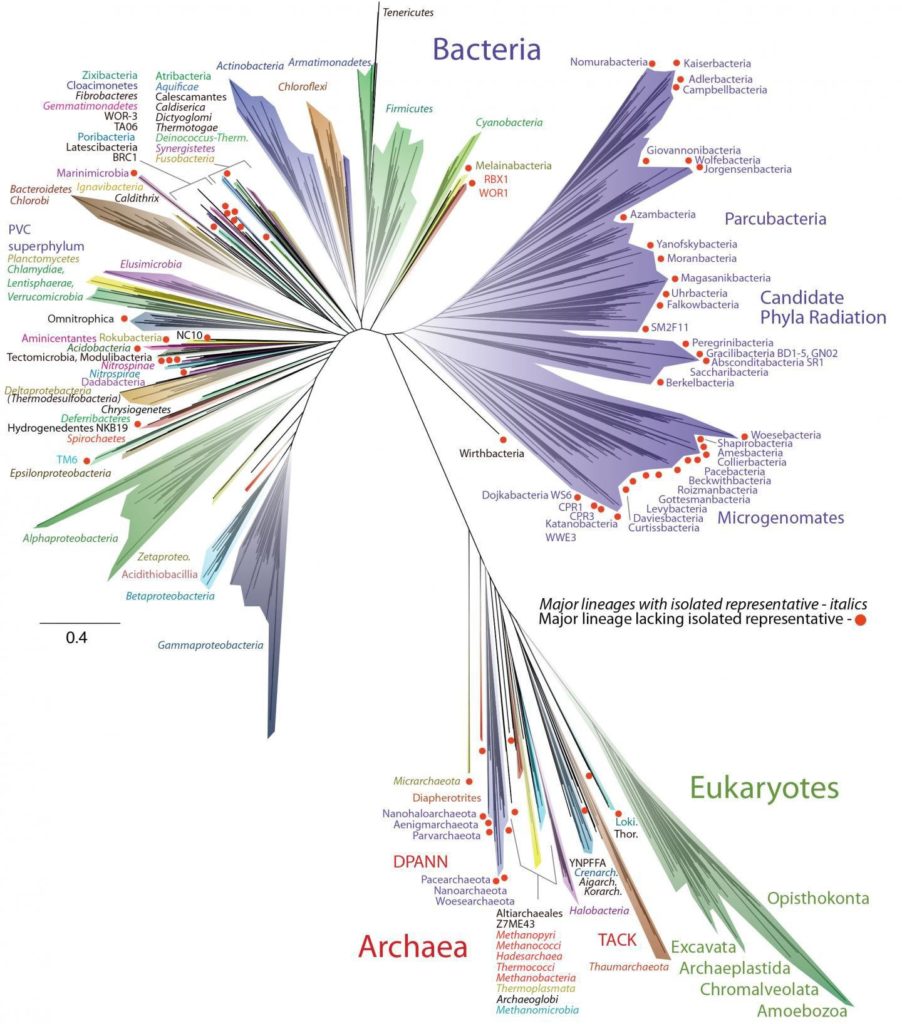
A team of scientists unveiled a new tree of life on Monday, a diagram outlining the evolution of all living things. The researchers found that bacteria make up most of life’s branches. And they found that much of that diversity has been waiting in plain sight to be discovered, dwelling in river mud and meadow soils.

“It is a momentous discovery — an entire continent of life-forms,” said Eugene V. Koonin of the National Center for Biotechnology Information, who was not involved in the study.

The study was published in the journal Nature Microbiology.

In his 1859 book “On the Origin of Species,” Charles Darwin envisioned evolution like a branching tree. The “great Tree of Life,” he said, “fills with its dead and broken branches the crust of the earth, and covers the surface with its ever branching and beautiful ramifications.”

Ever since, biologists have sought to draw the tree of life. The invention of DNA sequencing revolutionized that project, because scientists could find the relationship among species encoded in their genes.

In the 1970s, Carl Woese of the University of Illinois and his colleagues published the first “universal tree of life” based on this approach. They presented the tree as three great trunks.

Our own trunk, known as eukaryotes, includes animals, plants, fungi and protozoans. A second trunk included many familiar bacteria like Escherichia coli.

The third trunk that Woese and his colleagues identified included little-known microbes that live in extreme places like hot springs and oxygen-free wetlands. Woese and his colleagues called this third trunk Archaea.

Photo

The new tree of life that researchers published on Monday. It shows that much of Earth’s biodiversity is bacteria, top, half of which includes “candidate phyla radiation” that are still waiting to be discovered. Humans are in the bottom branch of eukaryotes.CreditJill Banfield/UC Berkeley, Laura Hug/University of Waterloo

Scientists who wanted to add new species to this tree of life have faced a daunting challenge: They do not know how to grow the vast majority of single-celled organisms in their laboratories.

A number of researchers have developed a way to get around that. They simply pull pieces of DNA out of the environment and piece them together.

In recent years, Jillian F. Banfield of the University of California, Berkeley and her colleagues have been gathering DNA from many environments, like California meadows and deep sea vents. They have been assembling the genomes of hundreds of new microbial species.

The scientists were so busy reconstructing the new genomes that they did not know how these species might fit on the tree of life. “We never really put the whole thing together,” Dr. Banfield said.

Recently, Dr. Banfield and her colleagues decided it was time to redraw the tree.

They selected more than 3,000 species to study, bringing together a representative sample of life’s diversity. “We wanted to be as comprehensive as possible,” said Laura A. Hug, an author of the new study and a biologist at the University of Waterloo in Canada.

The researchers studied DNA from 2,072 known species, along with the DNA from 1,011 species newly discovered by Dr. Banfield and her colleagues.

The scientists needed a supercomputer to evaluate a vast number of possible trees. Eventually, they found one best supported by the evidence.

It’s a humbling thing to behold. All the eukaryotes, from humans to flowers to amoebae, fit on a slender twig. The new study supported previous findings that eukaryotes and archaea are closely related. But overshadowing those lineages is a sprawling menagerie of bacteria.

Remarkably, the scientists didn’t have to go to extreme places to find many of their new lineages. “Meadow soil is one of the most microbially complex environments on the planet,” Dr. Hug said.

Another new feature of the tree is a single, large branch that splits off near the base. The bacteria in this group tend to be small in size and have a simple metabolism.

Dr. Banfield speculated that they got their start as simple life-forms in the first chapters in the history of life. They have stuck with that winning formula ever since.

“This is maybe an early evolving group,” Dr. Banfield said. “Their advantage is just being around for a really long time.”

Brian P. Hedlund, a microbiologist at the University of Nevada, Las Vegas who was not involved in the new study, said that one of the most striking results of the study was that the tree of life was dominated by species that scientists have never been able to see or grow in their labs. “Most of life is hiding under our noses,” he said.

Patrick Forterre, an evolutionary biologist at the Pasteur Institute in France, agreed that bacteria probably make up much of life’s diversity. But he had concerns about how Dr. Banfield and her colleague built their tree. He argued that genomes assembled from DNA fragments could actually be chimeras, made up of genes from different species. “It’s a real problem,” he said.

Dr. Banfield predicted that the bacterial branches of the tree of life may not change much in years to come. “We’re starting to see the same things over and over again,” she said.

Instead, Dr. Banfield said she expected new branches to be discovered for eukaryotes, especially for tiny species such as microscopic fungi. “That’s where I think the next big advance might be found,” Dr. Banfield said.

Dr. Hug disagreed that scientists were done with bacteria. “I’m less convinced we’re hitting a plateau,” she said. “There are a lot of environments still to survey.”

Correction: April 18, 2016
A picture caption on Tuesday with an article about a new tree of life published by scientists referred incorrectly to Methanosarcina, the organism shown. It belongs to the domain archaea, not bacteria.

QuanTuM, (tELe)TRaNS:pOR:TATion Of Micro:OrgA,NisimS

1-physicistsprBAkteria

So:uR_Ce : http://phys.org/news/2016-01-physicists-scheme-teleport-memory.html

Physicists propose the first scheme to teleport the memory of an organism

January 14, 2016
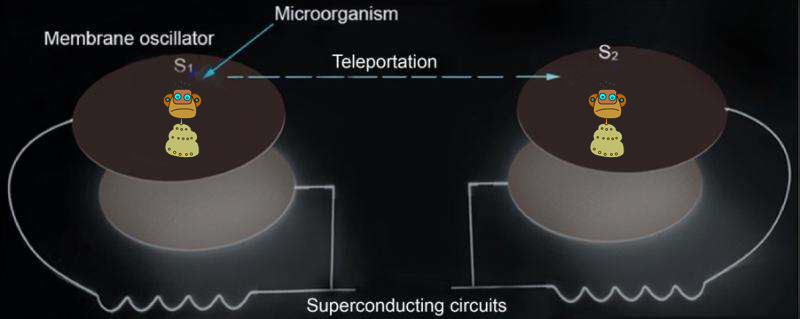
Quantum teleportation between two microorganisms is shown. The internal state (an electron spin) or the center-of-mass motion state of a microorganism on an electromechanical oscillator can be teleported to a remote microorganism on another …more

In “Star Trek,” a transporter can teleport a person from one location to a remote location without actually making the journey along the way. Such a transporter has fascinated many people. Quantum teleportation shares several features of the transporter and is one of the most important protocols in quantum information. In a recent study, Prof. Tongcang Li at Purdue University and Dr. Zhang-qi Yin at Tsinghua University proposed the first scheme to use electromechanical oscillators and superconducting circuits to teleport the internal quantum state (memory) and center-of-mass motion state of a microorganism. They also proposed a scheme to create a Schrödinger’s cat state in which a microorganism can be in two places at the same time. This is an important step toward potentially teleporting an organism in future.

In 1935, Erwin Schrödinger proposed a famous thought experiment to prepare a cat in a superposition of both alive and dead states. The possibility of an organism to be in a superposition state dramatically reveals the profound consequences of mechanics, and has attracted broad interests. Physicists have made great efforts over many decades to investigate macroscopic quantum phenomena. To date, matter-wave interference of electrons, atoms, and molecules (such as C60) have been observed. Recently, quantum ground state cooling and the creation of superposition states of mechanical oscillators have been realized. For example, a group in Colorado, U.S. has cooled the vibration of a 15-micrometer-diameter aluminum membrane to quantum ground state, and entangled its motion with microwave photons. However, the quantum superposition of an entire organism has not been realized. Meanwhile, there have been many breakthroughs in since its first experimental realization in 1997 with a single photon. Besides photons, quantum teleportation with atoms, ions, and superconducting circuits have been demonstrated. In 2015, a group at University of Science and Technology of China demonstrated the quantum teleportation of multiple degrees of freedom of a single photon. However, existing experiments are still far away from teleporting an organism or the state of an organism.

In a recent study, Tongcang Li and Zhang-qi Yin propose to put a bacterium on top of an electromechanical membrane oscillator integrated with a superconducting circuit to prepare the quantum superposition state of a microorganism and teleport its quantum state. A microorganism with a mass much smaller than the mass of the electromechanical membrane will not significantly affect the quality factor of the membrane and can be cooled to the quantum together with the membrane. Quantum superposition and teleportation of its center-of-mass motion state can be realized with the help of superconducting microwave circuits. With a strong magnetic field gradient, the internal states of a microorganism, such as the electron spin of a glycine radical, can be entangled with its center-of-mass motion and be teleported to a remote microorganism. Since internal states of an organism contain information, this proposal provides a scheme for teleporting information or memories between two remote organisms.

The proposed setup is also a quantum-limited magnetic resonance force microscope. It can not only detect the existence of single electron spins (associated with protein defects or DNA defects) like conventional MRFM, but can also coherently manipulate and detect the quantum states of electron spins. It enables some isolated electron spins that could not be read out with optical or electrical methods to be used as quantum memory for quantum information.

Li says, “We propose a straightforward method to put a microorganism in two places at the same time, and provide a scheme to teleport the of a microorganism. I hope our unconventional work will inspire more people to think seriously about quantum teleportation of a microorganism and its potential applications in the future.” Yin says “Our work also provides insights for future studies about the effects of biochemical reactions in the wave function collapses of states of an organism.”

Read more at: http://phys.org/news/2016-01-physicists-scheme-teleport-memory.html#jCp