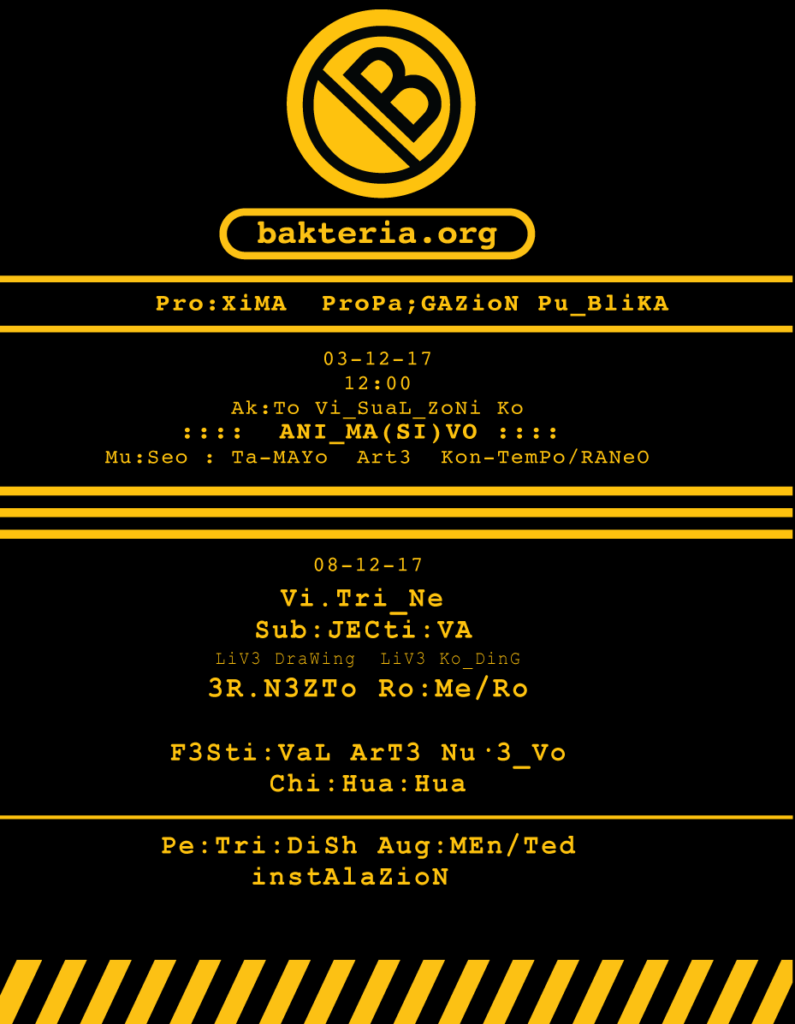
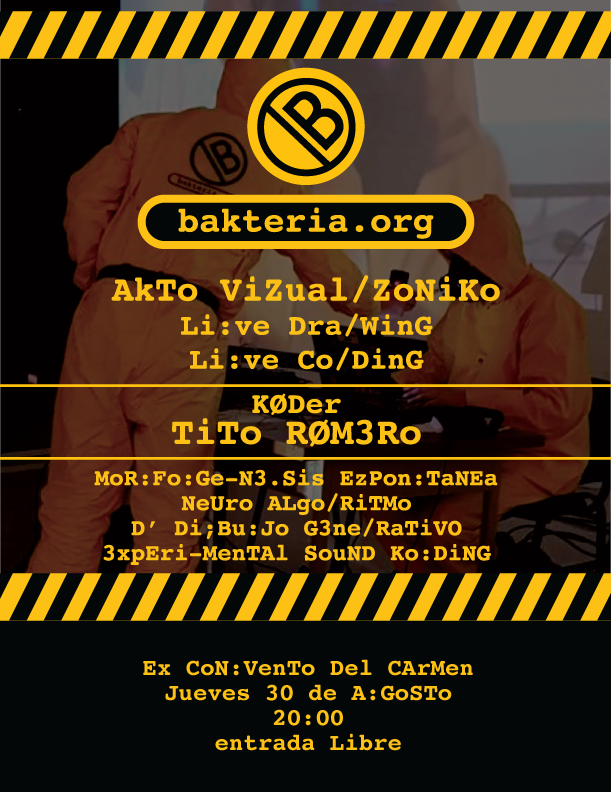
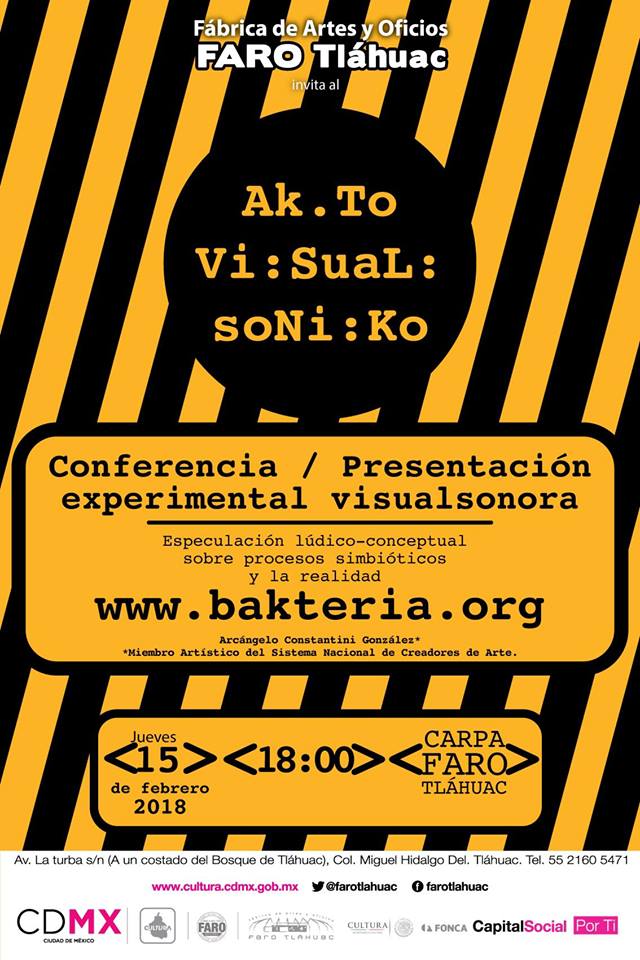
AkTo ViZual/ZoNiKo Li:ve Dra/WinG Li:ve Co/DinG

La InfLu:EnZiA d3 NuesTrOz MiKro:BioZ InteZ_Ti<NaLeZ 3n NueZTra E.Vo:LuZioN KoMo 3z:PeZi3
Una investigación reciente sugiere que la microbiota de un anfitrión biológico puede guiar su evolución hacia nuevas direcciones.
Los científicos son cada vez más conscientes de la actividad beneficiosa para nuestra salud y bienestar que ejercen algunos microbios del intestino y de otras partes del cuerpo, pero un biólogo de la Universidad de California, en Berkeley, Estados Unidos, se pregunta si estos microbios, nuestra microbiota, podrían también haber jugado un papel importante a la hora de dar forma a quiénes somos, al influir en la evolución.
Hay pruebas de que la interdependencia entre los animales y sus simbiontes (los organismos, normalmente bacterias, que viven dentro o sobre sus anfitriones sin poner en riesgo las vidas de estos bajo condiciones normales) tiene consecuencias para la evolución de ambos. Pero Michael Shapira, profesor de biología integradora de la Universidad de California en Berkeley, Estados Unidos, cree que las diversas comunidades microbianas que albergamos tienen un efecto más profundo, interviniendo notablemente en la evolución mediante una colaboración íntima por la supervivencia.
Shapira, quien estudia los microbios del intestino del gusano nematodo C. elegans, ha revisado evidencias que demuestran cómo afectan y contribuyen las microbiotas a la evolución del anfitrión, ya sea evolucionando junto a él o bien interviniendo en momentos críticos para ayudarle a adaptarse a un nuevo reto medioambiental.
[Img #35447]
Como ilustra este esquema, todos tenemos microbios en nuestros intestinos: nuestra microbiota. Michael Shapira propone que no todos los microbios son iguales. Algunos, los principales, son importantes para nuestra existencia y evolución, y podrían incluso ser pasados a nuestros descendientes. Además, está disponible una reserva flexible de microbios (miembros de los cuales pueden ser intercambiados por otros similares en el entorno) para ayudar en nuestra supervivencia y adaptación frente a los cambios medioambientales. (Imagen: Michael Shapira/UC Berkeley)
Estos ejemplos, afirma, refuerzan el concepto relativamente reciente del hologenoma, un término que se refiere a los genomas del anfitrión y de sus microbios como un todo, abarcando quizás a miles de diferentes tipos de bacterias sobre la piel, en el intestino e incluso en los órganos reproductores. En su estudio reciente, Shapira respalda la noción propuesta en 2008 por investigadores de la Universidad de Tel Aviv, en Israel, de que la evolución puede actuar sobre el hologenoma, en vez de sobre los genomas del anfitrión y de su microbiota por separado. Esto implica que a medida que el anfitrión evoluciona para adaptarse a un entorno cambiante, su microbiota juega un papel crítico en la dirección y participación en esa evolución.
Información adicional
MoN/Ta:J3 de
Pe/Tri Di:SH AuG/MenteD R3a4L/iTy
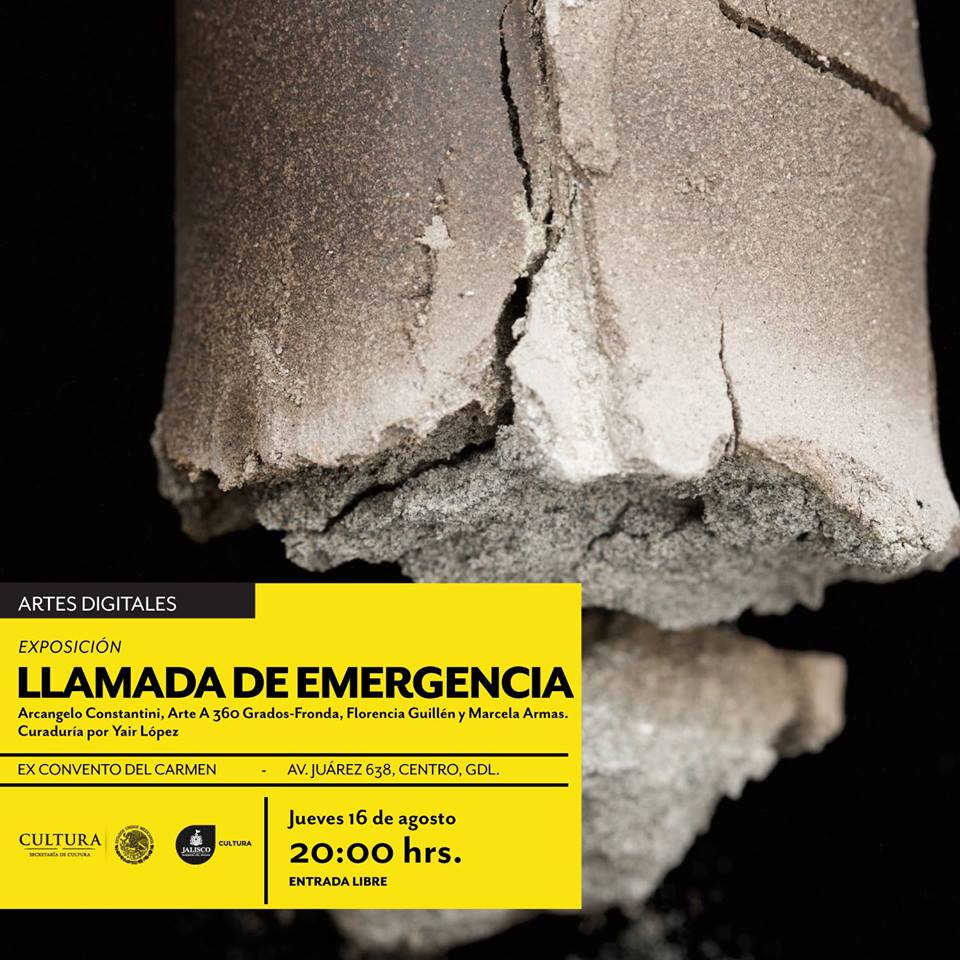
LLa_MA/Da de 3mer:GEnZia :
Está exhibición es una llamada de emergencia, una llamada desesperada de cuatro artistas mexicanos que son puestos en un mismo sitio por voluntad y determinismo: Arcangelo Constantini, Arte A 360 Grados-Fronda, Florencia Guillén y Marcela Armas. Exposición bajo la Curaduría de Yair López.
Los esperamos este jueves, 16 de agosto a la inauguración a partir de las 20:00 horas en las salas 1 y 2 del Ex Convento del Carmen
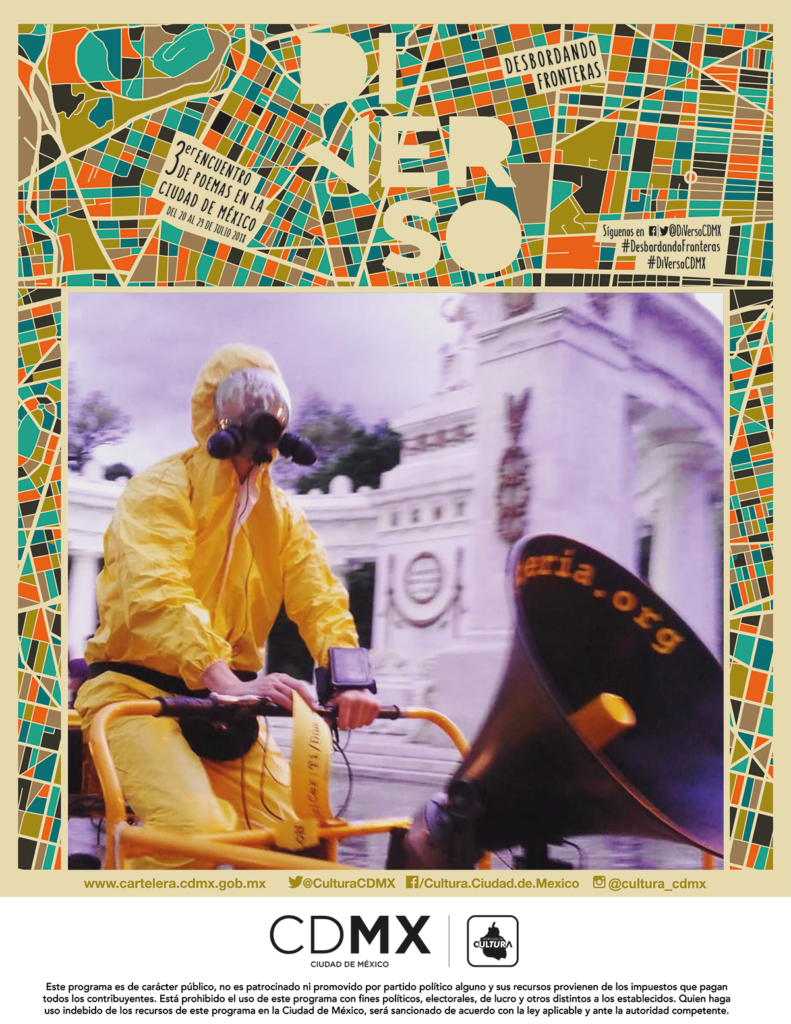
La Morfología es tanto el estudio de las formas y estructuras biológicas como las del diseño De la misma manera en lingüística estudia la estructura de las palabras. Los dadaístas desarrollaron la escritura automática, como un proceso poético en el que liberan al consciente y dejan fluir al subconsciente en la escritura de textos, Bakteria estructura a el lenguaje como un organismo que evoluciona, muta cambia y se transforma, con el advenimiento de los sistemas computacionales, un arsenal de caracteres ascii, simbolos del alfabeto fonético están en disposición de usarse para infectar la gramática y estetizar la lectura
Un acto morfo poético de infección gramatical a palabras, que surgen del subconsciente como un proceso creativo no programado y sin sentido inmediato para la conciencia, son re-escritas para construir micropoemas léxicos, estas serán impresas en papel amarillo mezcladas y seleccionadas al azar Usando un Vocoder serán declamadas las palabras infectadas, la re-estructura morfológica es la pauta de lectura fonetica La lectura será en tiempo real circulando en un triciclo con un sistema de amplificación por perifoneo , el triciklo será un sistema de propagación léxica y poética
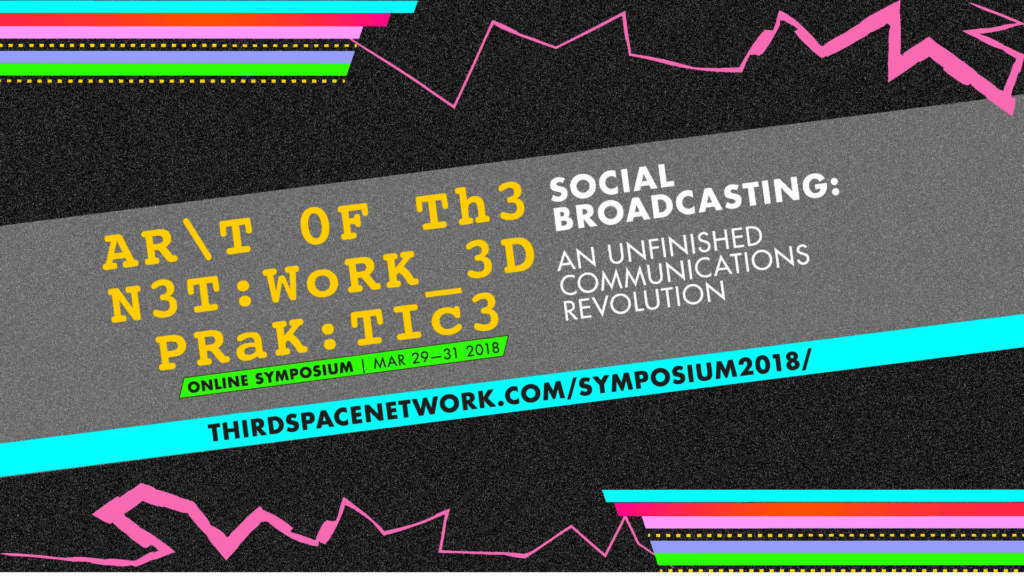
THE ART OF THE NETWORKED PRACTICE ONLINE SYMPOSIUM
A three-day international gathering presenting keynotes, live Internet performances, and global roundtable discussions.
THE ART OF THE NETWORKED PRACTICE ONLINE SYMPOSIUM is a collaboration between the School of Art, Design & Media at
Nanyang Technological University (Singapore); LASALLE College of the Arts (Singapore); & The School of the Art Institute of Chicago, Department of Performance (US)
MARCH 29 – MARCH 31, 2018
https://
LOGIN
All events are online via Adobe Connect Web conference
https://
Download Adobe Connect Application if prompted
Select “Guest,” type your name, “Enter Room”
ONLINE REGISTRATION
http://bit.ly/
For event details, e-mailings and symposium participation
SYMPOSIUM CHAIR
Randall Packer, Associate Professor of Networked Art, Nanyang Technological University, School of Art, Design and Media, Singapore
KEYNOTES:
— Maria Chatzichristodoulou, Associate Professor in Performance and New Media, London South Bank University, UK
— Matt Adams, Blast Theory Co-founder, UK
LIVE NETWORKED PERFORMANCES:
— Online En-semble – Entanglement Training: Directed and performed by Annie Abrahams (FR) with Antye Greie (FI), Helen Varley Jamieson (DE), Soyung Lee (KR), Hương Ngô (US), Daniel Pinheiro (PT), Igor Stromajer (DE), and NTU students.
— igaies: Directed and performed by Jon Cates (US) with Roberto Sifuentes (US), Arcángelo Constantini (MX), Shawné Michaelain Holloway (US), 愛真 Janet Lin (US) & Paula Pinho Martins Nacif (UK) (XXXtraPrincess)
| ABOUT |
The Art of the Networked Practice Online Symposium is an international gathering presenting emerging research, artistic work, and technological innovation in the networked arts. Intended as a global and inclusive gathering, with no registration fees, the symposium unites local and remote speakers and audiences from all corners of the world via Webconferencing, bridging Singapore with an active international new media arts community that transcends geographic and cultural boundaries. The symposium demonstrated how networked space can be used to activate live performance and online artistic work, stimulate creative dialogue, and encourage open sharing of knowledge through an online global exchange.
| SOCIAL BROADCASTING: AN UNFINISHED COMMUNICATIONS REVOLUTION |
Media historian and activist Gene Youngblood signals the need for “a communications revolution… an alternative social world” that decentralizes the experience of the live broadcast through the creative work of collaborative communities. In response to Youngblood’s call-to-action, the Art of the Networked Practice Online Symposium will have as its theme, “Social Broadcasting: An Unfinished Communications Revolution.” Through the presentation of keynotes, live performances, and global roundtable discussions, the Art of the Networked Practice Online Symposium explores the concept of social broadcasting and its histories as a revolutionary shift from one-to-many streaming and performance modalities to distributed peer-to-peer interactions that creatively join artists and audiences in live, networked spaces.
| PROGRAM @ A GLANCE |
::: Day 1: Thursday, March 29,
School of Art, Design and Media, Nanyang Technological University, ADM 3-25, Singapore
7am-10am CDT-Chicago / 8am-11am EDT-East Coast / 1pm-4pm BST-UK /
2pm-5pm CEDT-Central Europe / 8pm-11pm SGT-Singapore
[Being & Connectedness in Telematic Space]
INTRODUCTIONS: Randall Packer, Symposium Chair; Vibeke Sorensen, Chair, School of Art, Design and Media, Nanyang Technological University, Singapore
KEYNOTE: Maria Chatzichristodoulou: Live Art and Telematics: The Promise of Internationalism
LIVE NETWORKED PERFORMANCE: Online En-semble – Entanglement Training directed by Annie Abrahams with collaborators
POST-PERFORMANCE GLOBAL ROUNDTABLE DISCUSSION: Moderated by Maria Chatzichristodoulou and Annie Abrahams with collaborators
::: Day 2: Friday, March 30
LASALLE College of the Arts, Block F, Level 3, Room F309, Singapore
7am-10am CDT-Chicago / 8am-11am EDT-East Coast / 1pm-4pm BST-UK /
2pm-5pm CEDT-Central Europe / 8pm-11pm SGT-Singapore
[Networking the Real and the Fictional]
INTRODUCTION: Steve Dixon, President, LASALLE College of the Arts, Singapore
KEYNOTE: Matt Adams: The Here, the Now, the Audience and the Spectator
GLOBAL ROUNDTABLE DISCUSSION: Moderated by Maria Chatzichristodoulou and Steve Dixon
::: Day 3: Saturday, March 31
School of the Art Institute of Chicago, Department of Performance, Performance Space 012 (Columbia Bldg basement)
10am-1pm CDT-Chicago / 11am-2pm EDT-East Coast / 4pm-7pm BST-UK /
5pm-8pm CEDT-Central Europe / 11pm-2am SGT-Singapore
[igaies – intimate glitches across internet errors]
INTRODUCTION: Jon Cates, Associate Professor Film, Video, and New Media, School of the Art Institute of Chicago, US
LIVE NETWORKED PERFORMANCE: igaies: directed by Jon Cates with collaborators
POST-PERFORMANCE GLOBAL ROUNDTABLE DISCUSSION: Moderated by Jon Cates and Roberto Sifuentes with collaborators
CLOSING: Randall Packer, Symposium Chair
See Program for specific times and details.
https://
| THIRD SPACE NETWORK |
The Third Space Network (3SN) is an Internet broadcast channel for the live media arts and creative dialogue. 3SN is a project of Randall Packer in conjunction with research at his studio in Washington, DC, and the School of Art, Design and Media, Nanyang Technological University in Singapore, where he is an Associate Professor of Networked Art.
https://
Twitter: @thirdspacenet
Facebook: https://www.facebook.com/
| SUPPORT |
The Art of the Networked Practice | Online Symposium is made possible through support from LASALLE College of the Arts, School of the Art Institute of Chicago, School of Art, Design and Media at Nanyang Technological University, along with grants from NTU CLASS, EdeX, and Startup Funds.
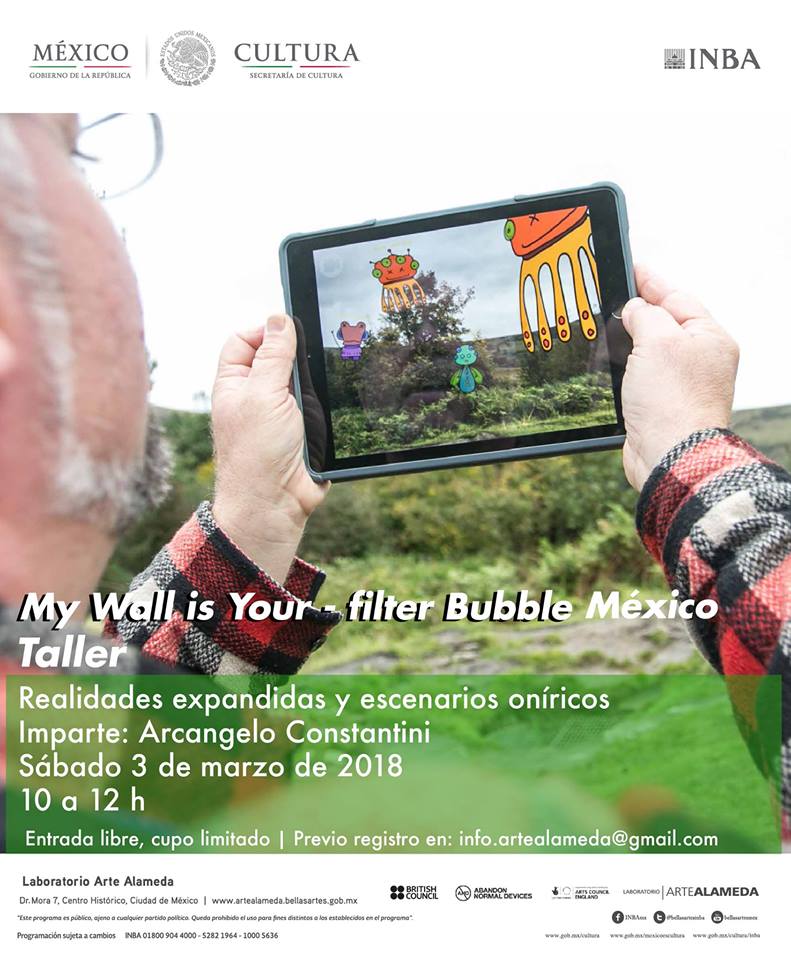
Este taller empoderará a los participantes a generar sus propios enlaces y conexiones a través de la colaboración. Abrirá paso al diálogo y buscará cerrar las grietas de comunicación que los filtros burbuja propician a través de la polarización de opiniones.
Registro previo: info.artealameda@gmail.com
British Council Mexico
#MWYFB #Tecnología #PensarenelInternet #Educación #LAA
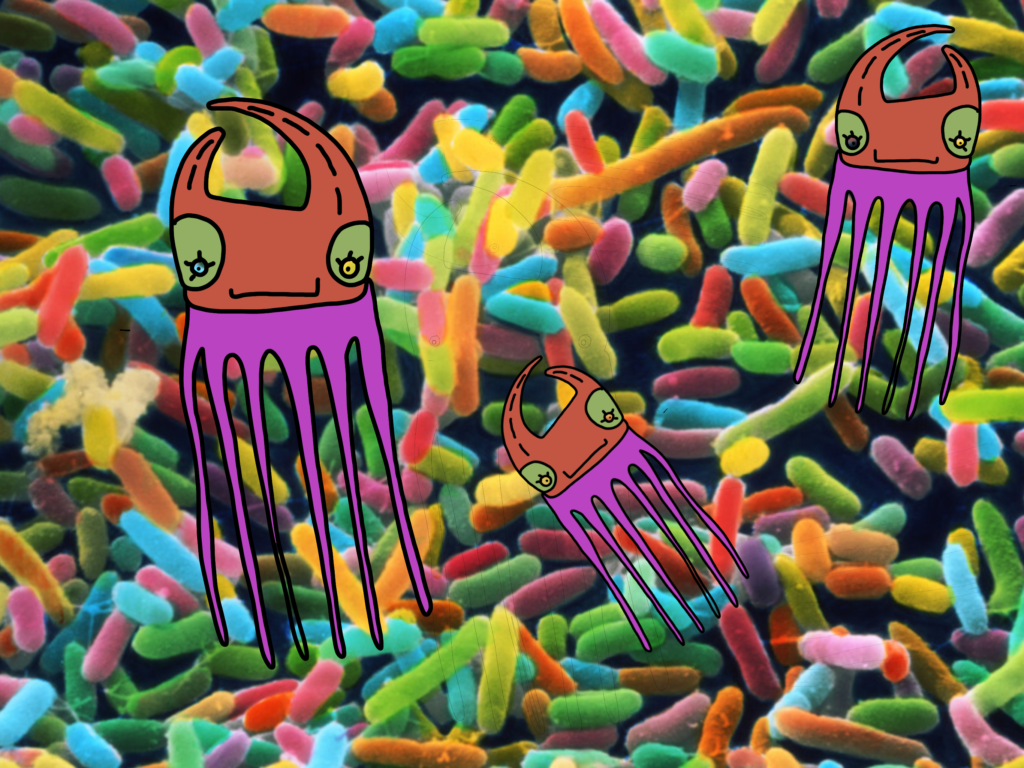
E. coli bacteria
www.edbites.com/2013/01/gut-feelings-eds-and-the-microbiome/
Consider this thought experiment:
Drop a person in a blender (since it’s all hypothetical, go ahead and make it someone you don’t like. Feel better? I bet you do!). Then, count all the total number of cells that are produced. Only one in ten of these cells will be human. The other 90%? Those are all microbes. If you look at the total number of genes in your human smoothie (NOT coming soon to a Jamba Juice near you), the numbers are even more skewed: only one in 100 genes are human. The rest are, again, bacterial. The total collection of all of these bacteria living in and on our bodies is known as the microbiome.
The idea isn’t to gross out the card-carrying germophobes among us. But let’s face it: we’re just as much bacterial as we are human. Plenty of these microbes live on our skin, in our lungs and genital tracts. The mother lode of microbes, however, live in our gut. They are crucial to extracting energy from food, and these microbes are extremely sensitive to what we eat. Starving mice for just one day dramatically alters the composition of their gut microbes. Specifically, it decreases a type of bacteria known as Firmicutes. When researchers transplanted Firmicutes into the guts of lean mice, they rapidly gained weight (Crawford et al., 2009)
When it comes to eating disorders, there isn’t much talk of microbes. There are the occasional papers from researchers like Sergei Fetissov about potential auto-immune responses in people with eating disorders, and some work on PANS (pediatric auto-immune neuropsychiatric syndrome) and anorexia, but generally, researchers haven’t looked at the role of the microbiome in triggering or perpetuating an eating disorder.
Much work has been done in obesity research. Scientists have consistently found that people with a BMI >30 have different gut microbes than people with BMIs in the “normal” range. As well, bariatric surgery also significantly changes gut microbes as people lose weight, making them look more similar to the bacterial profiles seen in “normal weight” individuals. A more recent study in The ISME Journal proposed a microbiome diet: eating foods that would eliminate a type of bacteria called Enterobacter helped a person lose drastic amounts of weight in a short period of time (Fei & Zhao, 2012).
So how are microbes involved in eating disorders? No one really knows. Cindy Bulik has begun a study looking at this relationship, but the results still aren’t in. Based on the studies above, it’s reasonable to assume that ED behaviors (starving, binge eating, and/or purging) will have a significant effect on a person’s microbiota. It still has to be measured, but I would bet a lot of money on it. The question is what do these microbial changes have to do with ED symptoms?
Imbalances in gut microbes in mice and rats have been found to alter patterns of risk-taking and anxious behaviors–something that also happens in people with EDs. They could also, perhaps, explain weight loss seen in anorexia and EDNOS. Maybe the initial restricting triggered a significant change in gut microbes that amplified the effects of malnutrition. Maybe they lacked a group of microbes that produced an important hormone regulating hunger and satiety. No one really knows.
One hint to the potential role of microbes in EDs comes from a study published today in the journal Science (Smith et al., 2013). The scientists studied the relationship between gut microbes and kwashiorkor, a form of severe malnutrition that occurs when a person doesn’t eat enough protein. Of the 317 twin pairs from Malawi that the researchers followed for three years, half became significantly malnourished and 7% developed signs of kwashiorkor. Obviously, a lack of protein is crucial to the development of this disease but it’s not the only factor as not everyone with a severely protein-deficient diet will develop kwashiorkor. Something else had to be going on.
First, the researchers treated twin pairs discordant for kwashiorkor (that is, one twin had it, whereas the other didn’t) with “ready-to-use therapeutic food”- basically peanut butter on steroids. Twins with kwashiorkor had significantly different from nearby twins who (presumably) at pretty close to the same diet. The researchers found significant changes to the gut microbes in the ill children with the use therapeutic food. Discontinuing the therapeutic food caused a regression in the functioning of the gut microbes.
The kicker is this: when the researchers fed mice a standard Malawian diet and inoculated them with microbes from the guts of malnourished children, they rapidly lost weight and also developed kwashiorkor. This happened despite the fact that their diets contained adequate calories. One of the reasons that the researchers believed the therapeutic food is so effective at treating kwashiorkor is that it helped restore normal gut microbes.
To say what effect restoring normal gut flora will have on ED symptoms remains to be seen. Probiotics are a hot item, but much of the research is fairly overblown. There’s definitely still potential there, and we need to know more about which populations of people are likely to benefit and which aren’t. But it’s an interesting idea, and I think we need to know a lot more about the role of the microbiome in the development and perpetuation of EDs.
In closing, a quote from scientist John Rawls in an interview with Scientific American:
“We are in the midst of a revolution of our ability to describe the composition and physiological potential of these bacterial communities…What we can begin to speculate on, though, are the different types of relationships that might be taking place. We know gut microbiota enhance our ability to extract calories from complex carbohydrates, which is clearly a mutually beneficial relationship. But it’s thought that all vertebrates have the capacity to digest and absorb other types of nutrients, such as lipids, proteins and simple carbohydrates, so it’s not readily clear how we could enter into a mutually beneficial relationship with bacteria with regard to those nutrients.”
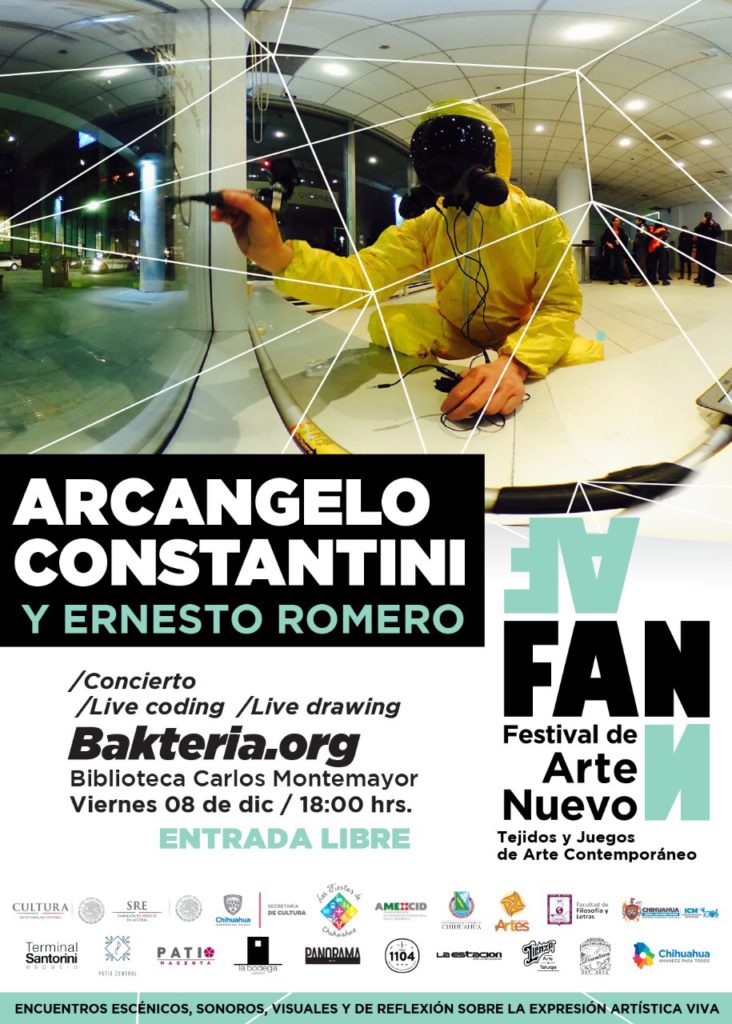 Vi.Tri_NA Sub:JEti:Va
Li:ve Dra/WinG
LIv3 KoDinG
TiTo RoM3Ro
f3zTi-VaL Art3 NueVo
Chi.Hua:Hua
R34L tiMe
G3NeRaTiVe Dra_WiNg
NéuRoALgoriTHm